Showing posts with label Trees. Show all posts

Saturday, April 29, 2017

White Showy Orchis, Ephemerals and Tree/Shrub Blooms

White Showy Orchis (note last years seed pod)


I spent a beautiful morning roaming the woods near my home under the guise of turkey hunting. I had seen these Showy Orchis last year before they bloomed and was pleased to see them blooming this year. I also found my first all white one. Needless to say my shotgun was forgotten somewhere on a log for a good portion of the morning. This is why I am almost no threat to the turkey population. Many other ephemerals were seen and photographed. I will also post several trees and shrubs I saw blooming this week within the New River Gorge National River.
White Showy Orchis


Showy Orchis

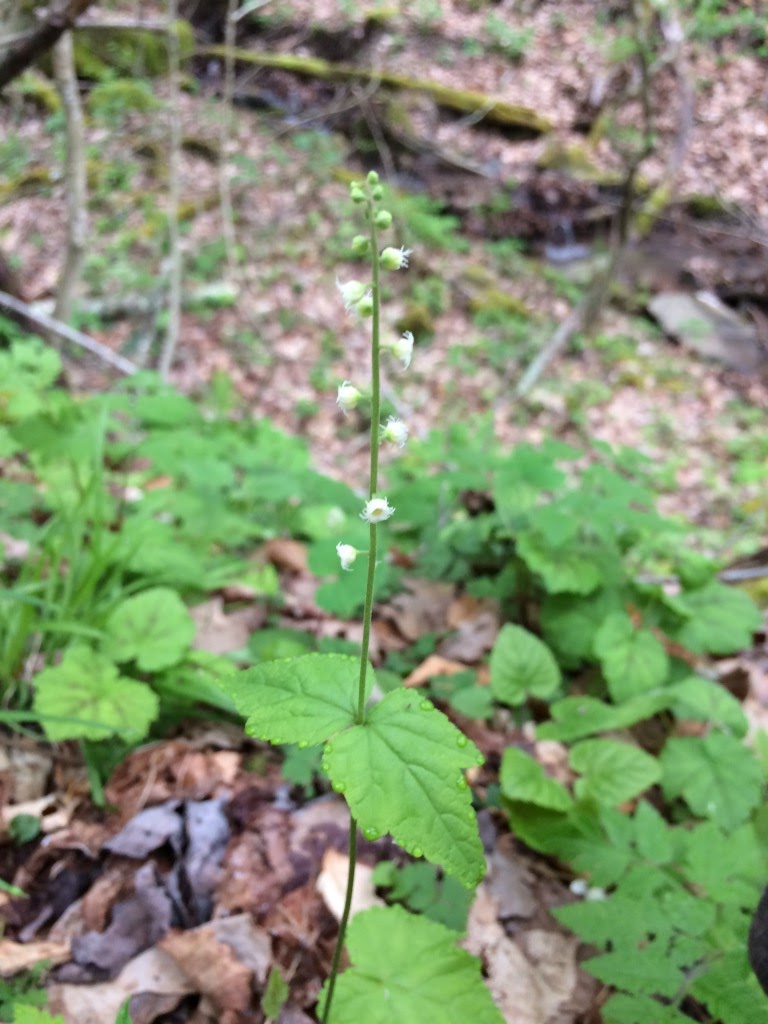
Mitrewort
Res-Spotted Newt or Red Eft
Purple Trillium
Foam Flower
Perfoliate Bellflower
Jack-In-The-Pulpit
This is the 'holler' where I found these wildflowers this morning.
To the left is another stream with this raised area between them. 
Virginia pennywort
Showy Orchis


Purple Trillium


Woodland Anemone 

Carolina Silver Bell


Carolina Silver Bell


Dogwood


Wild Blueberry

Dogwood

  
Hawthorn

Saturday, June 1, 2013

June

These three trees and the shrub love the edges of the woods. The trees are abundant now along the WV Turnpike as I go to work each day, but that is not a good place to stop for photos. They finally began blooming near my home, which is about 700 feet higher in elevation. 
          The Fringe Tree is another of those wildflowers that are designated by the species surname of virginicus. I believe virginicus means 'of Virginia', and it is of Virginia that West Virginia was formed from 150 years ago this month, on June 23. It, like the Flame Azalea, is often used in home gardens.

#110- Fringe Tree


Here is a multi-purpose tree. It's blooms are sporadic, but were heavy this year. The Locust is used here to make fence posts and I use it to make posts for wood sheds and other structures. Locust wood seems impervious to rot, lasting many years. They are tenacious in their growth, being very hard to eradicate. If you cut one down, within days, sprouts are coming up and in a couple of years a small stand of locusts are mature and ready to make new fence posts. Fence posts have been known to sprout leaves and grow branches as well. The flowers smell great and are sometimes eaten raw or in salads, being very sweet. 
#111- Black Locust

 Black Locust


The Bristly Locust is seen growing in waste areas and the edges of woods. It is named for its stems with bristles, which can be seen in the following photo, upper right
#112- Bristly Locust 
Bristly Locust


This shrub is Deerberry, a type of Blueberry. Only deer will eat the fruit.
#113- Deerberry


Poison Hemlock i a huge plant, the purple spotted stems aid in identification. All parts of the plant are poisonous, and I understand the dead, dried canes can be poisonous for three years. It is not native.
#114- Poison Hemlock  (non-native