Sunday, August 4, 2013

AUGUST


August is starting out with some great wildflowers. The weather has been unseasonably cool and getting into field and forest is very comfortable . Below are a few early August finds and I hope to post four Orchids in the next day or two. I have been checking a group of Crane fly Orchids for two weeks now and it seems like it is taking forever for them to open. And a neighbor has had Fringeless Purple Orchids in a wet field for the past few years, but we have not located them yet this year. But while looking I found a very nice pink flower that I assumed was introduced but is actually called Steeplebush, a native Spirea and a shrub. It is unusual in that it seems to have only one stem, making it look like  flower rather than a shrub. I also found it on the farm where I live, all of the following flowers are from here. 

#225- Steeplebush


 Notice the 'fringe' on the leaf stem of the Fringed Loosestrife.
#226- Fringed Loosestrife
#227- Evening Primrose 
#228- Blue Vervain
#229- Spotted Touch-Me-Not or Jewelweed

The farm here has a large patch of St. Johns Wort, and when I started studying this plant I found that there are seven or so varieties, some native some not. Once I started paying attention, I found two varieties here. The first one here is the Common St. John's Wort  a non-native with very showy flowers and the translucent dots on leaves that can be used for ID purposes. The dots are sacs of oil; the oil that is used in herbal remedies. 
#230- Common St. Johns Wort (non-native)

 The next one is a less noticable one with smaller flowers that close in the evening. It has black dots on the leaves and is Spotted St. John's-wort
#231- Spotted St. John's-wort

 Spotted St. John's-wort (note the black dots on leaves)
#233- Tall Hairy Agrimony

#232- White Vervain


#234- Spotted Water Hemlock


Sunday, July 28, 2013

A River Runs By It

I traveled some this week and found myself along the Kanawha River one day at a little city park with the grandbabies. While looking at geese and skipping rocks, I noticed  purple spots among the river side vegetation. It turned out to be a nice flower called  American Water-Willow, a new one for me. And when I got home at the end of a long week, it was raining. I started out early Saturday in a thunder storm, hoping for a break in the weather. I was headed for the Little Bluestone River near my home to search for Virginia Spirea, a shrub that I had never seen. From all of the reading I did this week, I know it is known on this river. And I knew this part of the river receives regular scours, which the spirea needs. I did not find it this time but did see many flowers and then was disappointed at how many were not natives. 
         I had recently found Purple Loosestrife in a drainage ditch and had read how invasive it is, but had no clue how bad until I saw this section of river and the solid purple sections of river bank. There are many pictures below and some will still need to be identified.


#215- Button Bush


Button Bush


#216- Rose Pink
#217- Oxeye Sunflower

#218- Allegheny Monkey Flower
#219- white wood aster


Purple Loosestrife along Little Bluestone River

#220- American Water Willow from Kanawha River  (cell phone picture)


#221- Garden Loosestrife (non-native)


#222- Bouncing Bet  (non-native)


Bouncing Bet  (non-native) 


#223- Asiatic dayflower  (non-native)

#224- Bull Thistle (non-native)


Saturday, July 20, 2013

Natives and Aliens

I went back to work this week. I am a school administrator and return to work a month before teachers, so immediately, I will be out of town for several days of conferences and training's. I hope to visit Volcano, WV, a defunct oil drilling town that is now a state park with plenty of wildflowers I hope.
       I needed to get caught up here before I leave, I have been busy roaming this week and taking pictures of everything I find. I tried a different point and shoot camera that I kept in my vehicle. It is an Olympus that has a super macro setting, but I am unimpressed. Native flowers are shown first below and then the aliens. I have seen non-native flowers called everything; introduced, invasive, alien, trash, pests and etc. Many are very interesting, some have redeeming value, most have been here for a long time and will always be here. 


 Notice the yellow cloud of pollen floating around this cattail after I flicked it and snapped the picture.
#198- Cattail 


#199- Black Eyed Susan 


#200- Thimbleweed
 Thimbleweed


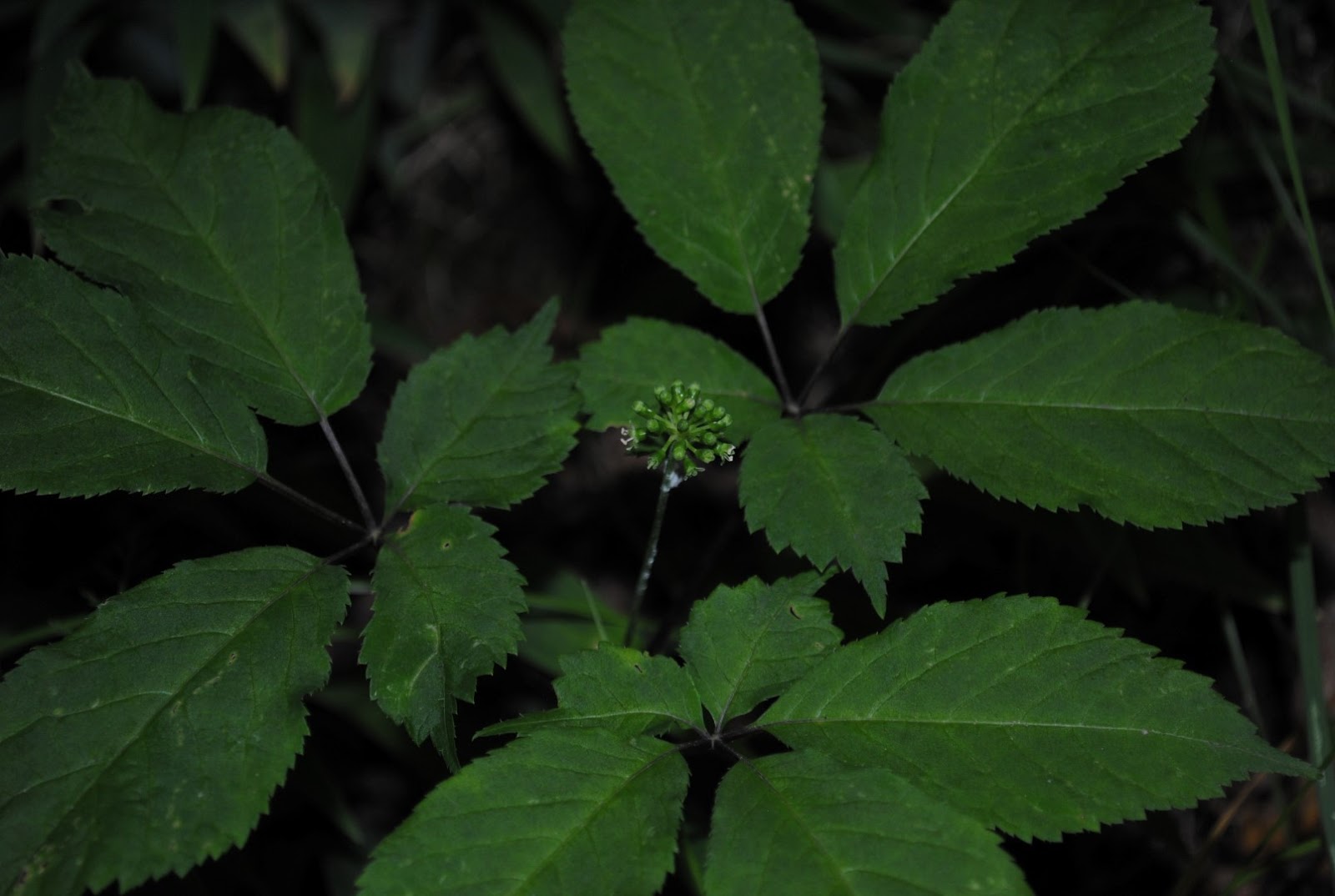
I had just noticed the Ginseng has started fruiting and remembered that I had took a picture of it just as it the tiny blooms started to open, but was waiting to the bloom was fuller before posting. But it was a sparse bloom all along. This is an enormously  popular plant in West Virginia, I am linking to the forest services webpage with harvesting rules. 

#212- Ginseng


Sourwood is very popular for the honeys produced from its flowers, there is plenty around my home but my bees don't seem to care much about it. 
#201- Sourwood Tree
#205- Trumpet Creeper


#202- Stinging Nettles


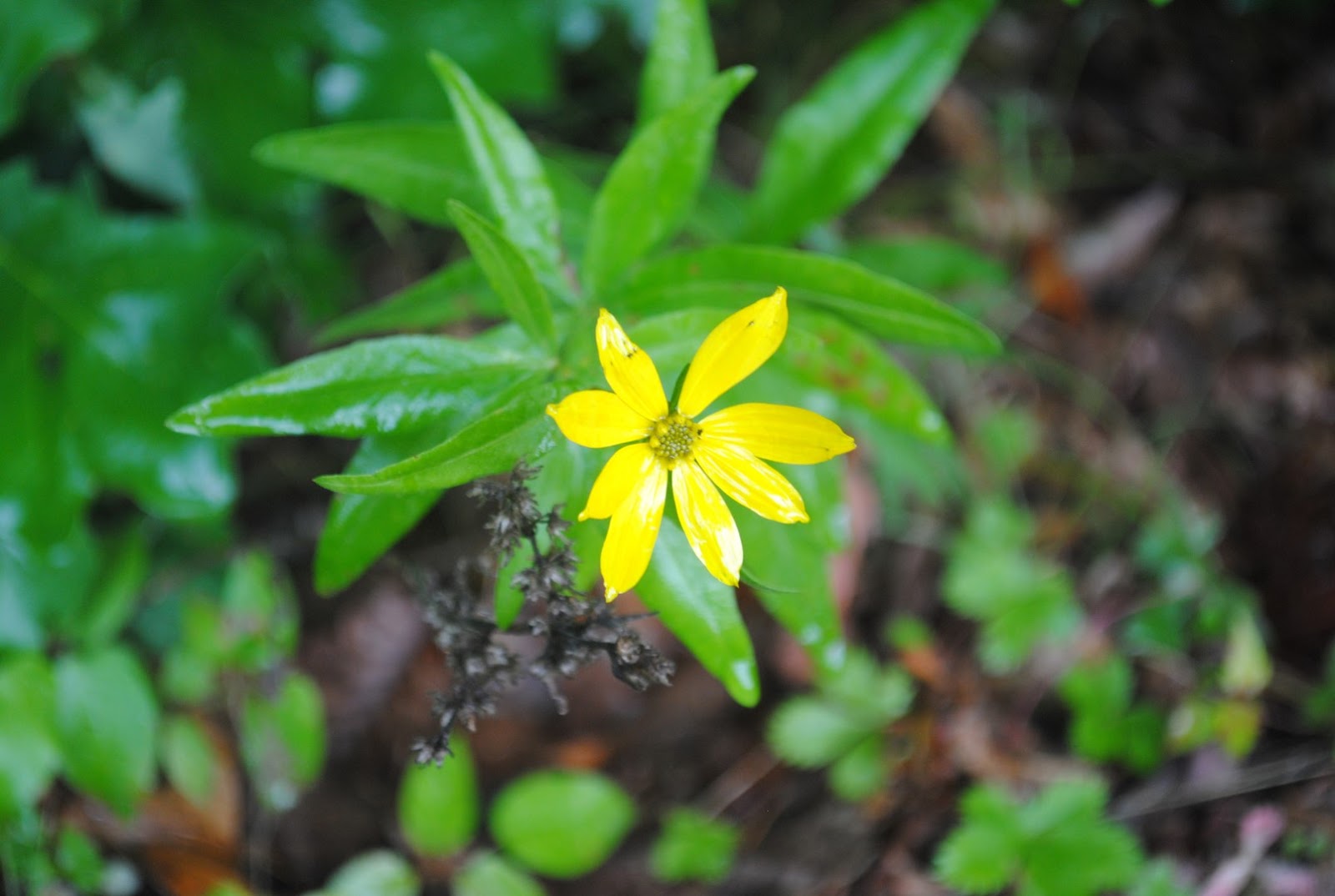
#203- Small Woodland Sunflower
#204- Great Tickseed

#206- Queen Anne's Lace (non-native)

Queen Anne's Lace (non-native) notice purple sterile flower i n middle

#207- Motherwort (non-native)
Motherwort (non-native)


#208- Bird's-foot Trefoil (non-native)

#209- Common Teasel (non-native)

#210 Purple Loosetrife (non-native)

#211- Common Mullen (non-native)


Jimsonweed is an introduced plant that is reported by some sources to have been in America since the 15th century. It may have been named after the Jamestown settlement. It is a great looking plant but every part is very poisonous, even to the point of touching it can cause serious problems.
#213- Jimsonweed (non-native)
Jimsonweed Fruit


Jimsonweed

#214- Harebell (non-native)

 Harebell (non-native)

Wednesday, July 17, 2013

Coralroot

I took another trip yesterday with my dad to hike  and to see a rare orchid, Bentleys Coralroot. Stanley Bentley's book, Native orchids of the Southern Appalachian Mountains is one of my favorites and his account of finding this orchid is amazing. Seeing this orchid for the first time three years ago was a highlight of my botany endeavors,  I also saw Spotted Coralroot that day for the first time, but have not seen it in the past two years; I have probably been too early. 
         It was great day and here are a few pictures of what we saw. 

#194- Bentleys Coralroot


 Bentleys Coralroot

 Bentleys Coralroot


#195- Selfheal
 Shinleaf was a completely new wildflower for me. I believe this one is the Round-Leaved variety.
#196- Round-Leaved Shinleaf

Round-Leaved Shinleaf

#197- Lance-Leaved Loosestrife
 This Rhododendron is different than Rhododendron Maximum, West Virginia's state flower, in that it is a smaller shrub, blooms as the other is ending, has a tighter flower cluster and the color is much pinker. I will label it when I nail it down. Any suggestions? Update: Seems like I can't find anything other than the Maximum. It still seems odd that it blooms later with a tighter cluster of flowers


The following fungus was very different than others I commonly see in that it was purple.