Monday, February 25, 2013

Lithics and Flowers

Because we are expecting another ice storm, I wanted to get out this evening for a little bit. I have been interested in Native American artifacts for many years and decided to walk to the garden, where for many years, I have found many arrowheads and related debitage (the waste material produced during lithic reduction and the production of chipped stone tools). I have worked with a local Archaeologist to list the site as an official West Virginia Archaeological Site. It contains Late, Middle and  Early Archaic (8000 B.C. to 1000 B.C.) points and tools. I'm no expert, but I do enjoy looking for, collecting and documenting these artifacts, especially in my own back yard. 
         Today, I was fortunate to find a very nice Savannah River point. 
Savannah River Point plus Debitage of Various Material
Points Found in the Garden Over the Years


 While washing the point off in a rain barrel, I noticed tiny white flowers around the barrel. Another flower for the Wildflower Big Year.          #2- Hairy Bittercress 


Hairy Bittercress 


It is not native but is now ubiquitous to most of the USA. Hairy Bittercress is usually considered an invasive lawn weed, is commonly eaten and has an interesting method of seed dispersal. When the seedpods are ripe the seeds are dispersed explosively for up to 1 m if the plants are shaken by the wind or by weeding operations. The seeds become sticky when wet and can be spread on tools and clothing.  It likes wet areas which may explain why they were blooming this early and only around the barrel. I set out this year to photograph and list every wild flower that I can. In the process, I will learn much about flowers that I usually ignore.
     

Sunday, February 10, 2013

Winter Hike on a Warm Day

Out for a three mile ramble today, limbering up while waiting for spring. I went to Camp Creek State Forest where, in a few weeks, the best display that I know of anywhere of Trout Lilly's will be blooming, plus dozens of others. I am hoping to find a white variation of the Trout Lilly there this spring.  What was I looking for today? Nothing really, but I was looking the whole time. I did not see one bird the whole afternoon even though it was sunny and in the 50's. I find myself watching for birds more nowadays, probably because I have read several birding books lately. I looked for the winter leaves of wildflowers and photographed a couple of waterfalls. 
        Camp Creek has a great trail system that uses many forest roads as well. I passed through marshy areas created by beaver ponds, damp hillsides that will be covered with Hepatica, Wild Ginger and Trout Lilly's, dry forest that will have Yellow Lady Slippers and piney flats that have Trailing Arbutus and Painted Trillium. All-in-all it is a great place to hike and the best part; 10 miles from home. 
Find information and park maps here: Camp Creek State Park and Forest.  


Sunday, February 3, 2013

Going Down Rabbit Holes

Spent the day (all church services canceled because of weather) searching the internet for leads on Snow Trillium. Trillium's are one of my favorite wildflowers and this is a West Virginia native that I would love to see. So I am trying to narrow down a spot in one of the six West Virginia counties that it is found to look for it. In the process, I ran across a picture of Walking Fern; this reminds me of a cluster that I saw on a rock ledge at Brush Creek Preserve just a few days ago.
Walking Fern, Brush Creek Preserve January 27, 2013
         I started down that rabbit hole to see how rare they are in West Virginia, but never found anything definitive. While doing that I found a picture of Adders Tongue Fern which led me down another hole. I have  a plant near my home that I assumed was Adders Mouth Orchid, and each year I look for a bloom and only find a tongue shaped stem. Every year, for five or more years, I was frustrated, waiting for that crazy orchid to bloom thinking it was too dry, too hot, too cold or too something. Mystery solved, its a fern, dummy. Down another hole; how many others are confused? Not much about that it seems. How common is this fern? Not much there either. Any one have a similar experience?
Adders Mouth Orchid that I have yet to see
     

Adders Tongue FERN   from near my home
  After a day chasing rabbits, I still don't know where to look for Snow Trillium (yet) but I have learned something new, which should be a daily goal  for each of us. 


My journey took me somewhat further down the rabbit-hole than I'd intended and, though I dirtied my fluffy white tail, I've emerged... enlightened.    Sherlock Holmes (2009)


Saturday, February 2, 2013

Bitter Cold, Snow, Grandchildren and a Library

Woke up this Groundhog day and it was 1 degree Fahrenheit and snowing. I had two of the grand babies so we headed for the library to find something to keep us busy for the day. After they got a dinosaur book and a Judy Moody movie  I picked up a new book to read; A Supremely Bad Idea: Three Mad Birders and Their Quest to See It All by Luke Dempsey. 
         I still refuse to become obsessed with birding even as I spent half the day with binoculars watching the feeders for Red Polls and Pine Siskins; two far north Finches that have been seen further south this year. I believe I enjoy the genre as much as anything; a combination of nature, travel, culture, adventure and wit. That genre includes several books I have read recently:
The Big Year, by Mark Obmascik 
The Orchid Thief by Susan Orlean
The Bluebird Effect: Uncommon Bonds with Common Birds by Julie Zickefoose 
Into Thick Air: Biking to the Bellybutton of Six Continents by Jim Malusa
And many fly fishing books by John Gierach, M.R. Montgomery and James Prosek.  I've also added to my wish list Orchid Fever: A Horticultural Tale of Love, Lust, and Lunacy by Eric Hansen and The Scent of Scandal: Greed, Betrayal, and the World's Most Beautiful Orchid by Craig Pittman.
         I also spent a little while reviewing February pictures from the last eight years in Picasa, the photo organizer I use. I had convinced myself that I should see some wildflowers before February is over, but I could only find pictures of snow, ice storms and occasionally, a crocus. 
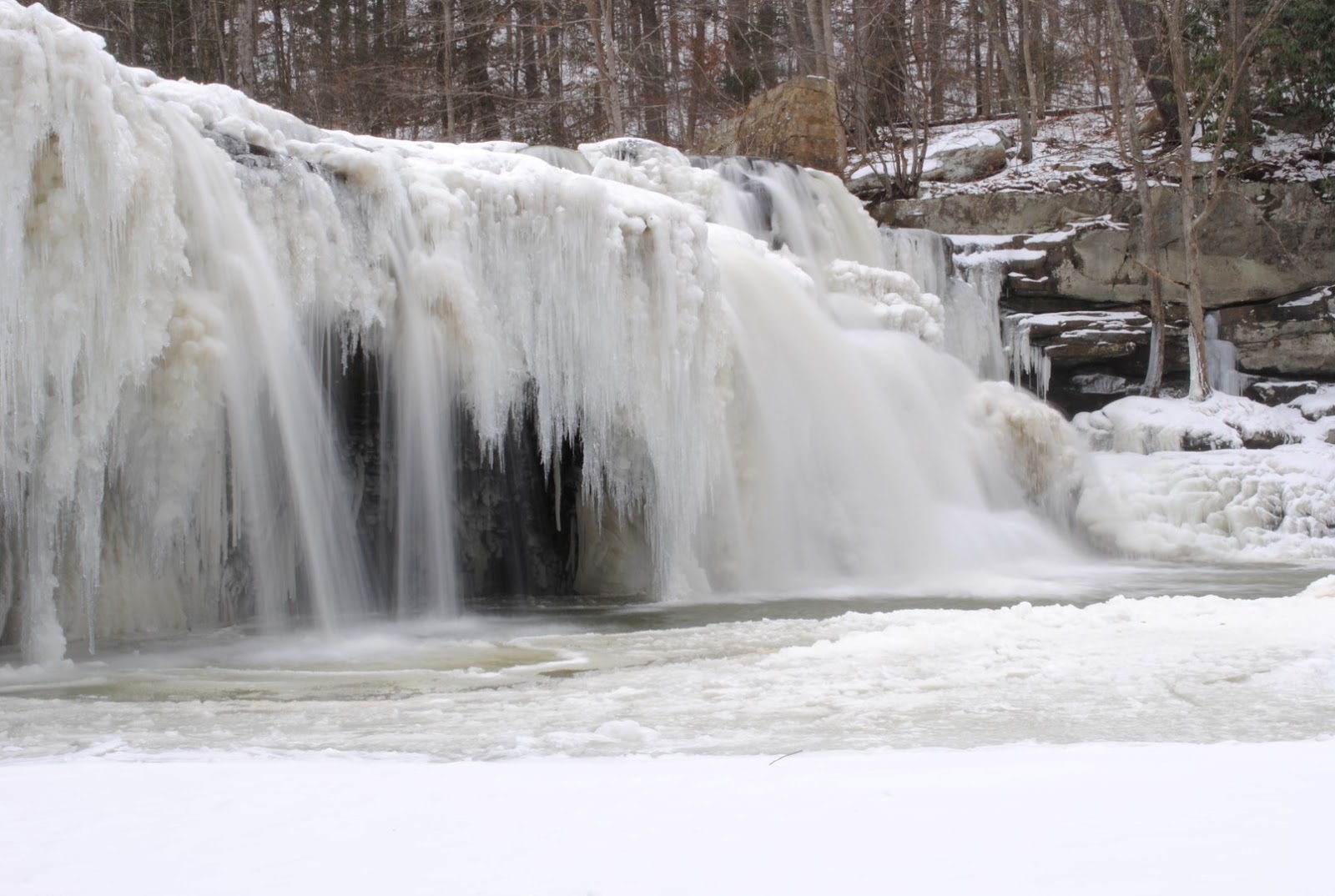
So, I leave you with one of my favorite waterfall pictures. I took it last year during winter runoff at Brush Creek Preserve and it hangs in my office and is the desktop on my computer and iPad. 
That March day was great;  I found three Trillium, one was new for me,Trillium sulcatum (furrowed wakerobin). So I am looking forward to March, which I can now say is just a month away. 


Sunday, January 27, 2013

Winter Hike - Orchids and Frozen Waterfalls

I was able to get out for a couple hours today between church services. I went to the only Nature Conservancy property in my area; Brush Creek Preserve with two goals:
1. To see how much of Southern West Virginia largest waterfall was frozen after a week of bitter cold.
2. To locate the globally rare shrub Canby’s mountain-lover. It is evergreen and I am hoping to locate it   
     while it is winter so that I can find it easier when it blooms. 
     
           The waterfall was about 75% frozen, I have seen it almost totally froze a few years ago. 
There were several smaller falls along the trail that were interesting as well.
Brush Creek Falls

The rest of the hike was just enjoying the day and keeping my eyes open for the Canby's. I saw several evergreen plants including this one. With help by Jim from "Jims Blog"  it is identified as    Tsuga canadensis or Canada hemlock. Jim is a great photographer of wildflowers and you can find his blog here or linked in the 'My Blogs List' to the right. I never found the Canby's so it seems that this summer I will be trekking into the hills and hollers of the Brush Creek Preserve rather than just on the path.
 Canada hemlock

I also found a cluster of Putty-Root, an interesting orchid with a winter leaf. When I find these, I always look for the Crane-fly orchid, which also has a winter leaf. I have yet to find it in winter or to see one in bloom. This cluster of Putty-Root had at least five plants and two seed capsule bearing stems from this summer, amazing after two feet of snow in October and several other heavy snows. 


Putty-Root Orchid
It was a great day and I enjoyed the hike immensely  I am looking forward to March and April when this same snow and ice coated preserve will be covered with many of my favorite wild flowers; Spring Beauty, a beautiful blue Hepatica, the best stand of Large Flowering Trillium anywhere, Purple Trillium, Trillium sulcatum,or Furrowed Wakerobin and many others.

Saturday, January 12, 2013

Number One - A Dandelion

Well, the premise of The Big Year is to find, identify and photograph as many West Virginia Native Wildflowers as I can  in one year. This includes common, rare and those that have been here for ever and are good as native. I thought the first would be a Dandelion, in January and it is. They were introduced many years ago, some say as a food source for the imported honeybee; which is a nice tie-in to another part of this day. Some say the deeply toothed leaves earned its Old French name of dent-de-lion, tooth of a lion. Find many facts about this interesting, edible, hardy and obnoxious flower here. Reporting a dandelion as the first flower in a wildflower big year would be equivalent to a birder reporting a European Starling as his first bird of the year.
Common Dandelion (I'll be avoiding Latin Names) 

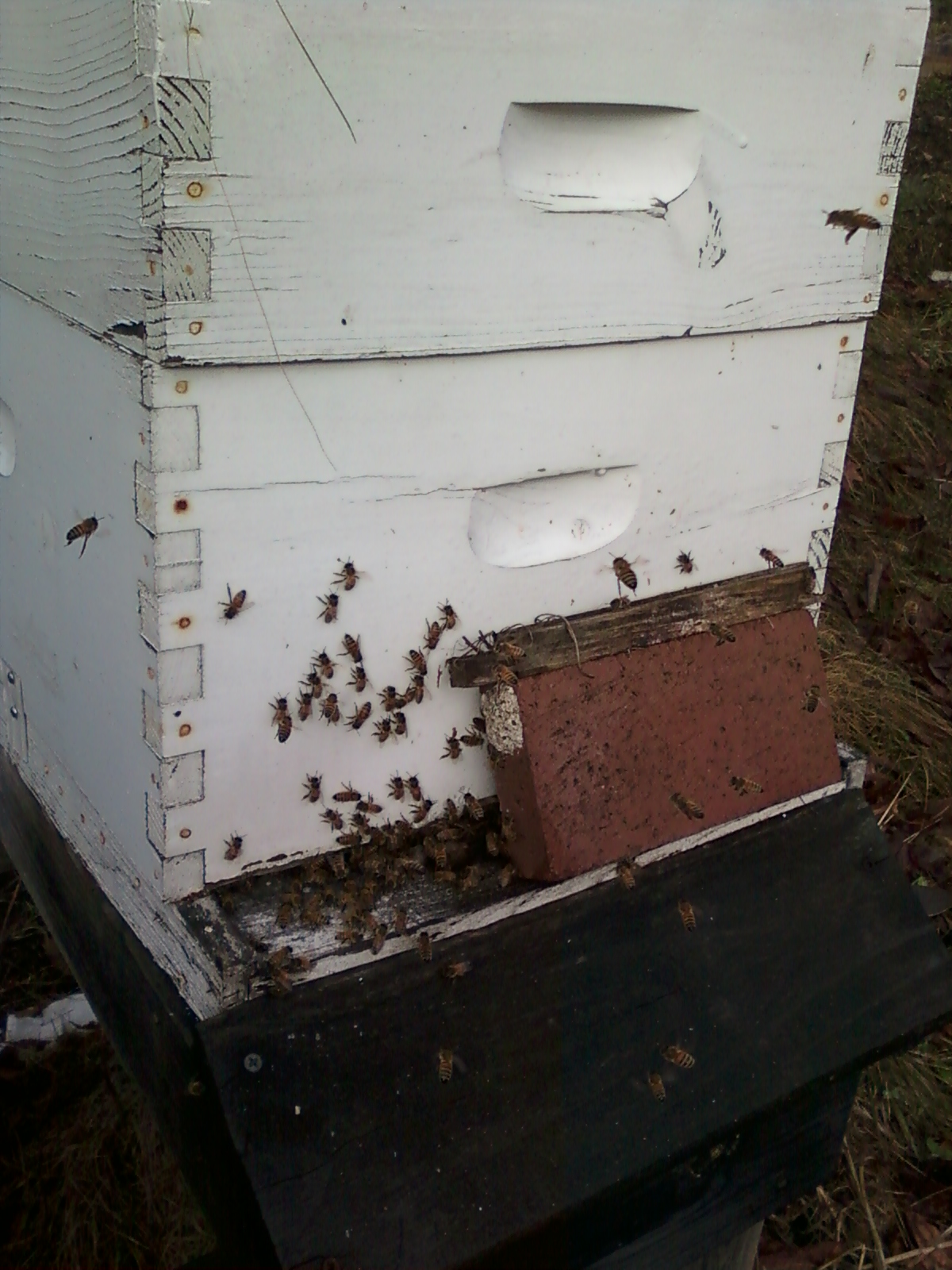
By the way; whats going on this winter? First there was two feet of snow in October, then several ice/snow storms in December and early January like normal. But today, it was sunny and 68 degrees. It's been milder and rainy for a few days so its no wonder the dandelions are trying to bloom and I found Daffodil heads several inches above ground and my honeybees were flying everywhere.


  I suppose this winter is like many past and future winters; mostly normal with a few odd weather days. (A nice day in January when you can get in a nice hike with the grandbabies will eliminate the shack nasties for a few days) But I worry about it throwing off the normal bloom time of wildflowers. Last year was extremely mild and most wildflowers in WV, and around the east coast, bloomed a couple of weeks early, causing me to miss a few. But I am looking forward to spring whenever it gets here; Blood Root, Trout Lilly, Trillium  even those almost microscopic flowers that I can see in the yard, but have never taken the time to properly identify

Saturday, January 5, 2013

No Winter Blues

Was out and about today pruning fruit trees. I enjoy walking this time of year even though there are no wildflowers in bloom. Out of habit, I am always looking and I do see interesting things.
Today it was a vine, Clematis virginiana, a native Clematis commonly called Virgins Bower. Suffice it to say that rather than trying to explain that to the grand kids, we always call it Clematis.


This week, I also saw an interesting bird at my feeders. I posted to several forums and emailed to experts and the consensus is that it is probably a common Purple Finch that has a condition called leucism which is a pigment deficiency that causes either patches and blotches of white plumage or an overall buff coloration. This guys white belly and white collar made me think I had a displaced rarity that would bring birders flocking to my home; willing to pay for parking and buy coffee at exorbitant prices. Oh well, it was interesting to watch, but I cannot afford another consuming hobby; I already have wildflowers, arrowhead hunting and collecting, metal detecting, bottle hunting and collecting and who knows what else. Its like Mark Twain once said, "When your hobbies get in the way of your work - that's OK; but when your hobbies get in the way of themselves... well...”. Birds could do that for me, so could butterflies, dragonflies and many other things which I just try to stay informed about, but not obsessed.  

Leucistic Purple Finch